Showing posts with label novelty. Show all posts

The Festive Five (2012) - Christmas for Suckers

Please go here to find the following Christmas songs.
Deck Us All with Boston Charlie - Lambert, Hendricks & Ross

Grateful for Xmas - Hayes Carll

I Don’t Believe In Christmas - The Sonics

Jingle Bells - Leo Watson

Merry Xmas You Suckers - Paddy Roberts
This page is no longer updated. *Sniffs*

Evocations of the Dance IV: Crossovers: When Highbrow Went Lowbrow, When Lowbrow Went Highbrow (1)


http://www.jazzstudiesonline.org/files/Jazz%20as%20Decal.pdf

Fair warning: this is an exercise in false dichotomies – jazz and classical music in the twentieth century were often feeding off similar roots. But my key contention is that even now, long after Gunther Schuller’s ‘Third Stream’, the phenomenon that is the appeal of ‘World Music’, and the fusion of everything that isn’t bolted down (to mix a metaphor), we still have a sense of what is jazz and what is classical music.

It could be borrowings of melodic, harmonic or rhythmic qualities, or it could be the tendency of jazz musicians to favour more complex harmonies or to otherwise show their allegiance to the avant garde, which seems to me more of a highbrow borrowing from the classical music world than an indigenous jazz trait.

So, the following list of tracks represent a slightly selective history of the confluence of jazz tracks with classical elements and classical tracks with a jazz influence.

I want this list to be an organic thing. If you can suggest any tracks I’ve neglected, please leave a comment.

Late 19th & Early 20th Century
 

YearThe Jazz Side Of ThingsThe Classical Side Of Things
1869
Hungarian Dance No. 5 in G minor (Brahms, 1869) - Yehudi Menuhin, p. Adolph Baller - 1947
1902On Emancipation Day (from In Dahomey, Will Marion Cook & Paul Lawrence Dunbar) - Len Spencer, banjo Vess L. Ossman - 1902
1903I'm A Jonah Man (from In Dahomey, Will Marion Cook & Paul Lawrence Dunbar) - Arthur Collins - 1903
1904Smoky Mokes (Cakewalk) - Peerless Orchestra - 1904Allegro Marcato (Three Pieces) (Frank Bridge, 1904) - Phantasie Quartet - 1994
1905
Bethena (Concert Waltz) (Scott Joplin, 1905) - Joshua Rifkin - 1970
1906
Central Park in the Dark (Ives, 1906) - Vladimir Cherniavsky & the Polymusic Chamber Orchestra - 1951
1908
Golliwogg’s Cakewalk (Debussy, 1908) - Sergei Rachmaninov - 1921
1909
In Dahomey (Cakewalk Smasher) (Percy Grainger, 1909) - Marc-Andre Hamelin - 1996
1910Dere was a man (from Treemonisha, Scott Joplin, 1910) - Gunther Schuller - 1976
1911
Polka de W.R. for piano in A flat major (Behr arr. Rachmaninov, 1911) - Sergei Rachmaninov - 1929
1914Swing Along (Will Marion Cook) - The Afro-American Folk Singers - 1914
Castle House Rag (James Reese Europe) - Europe’s Society Orchestra - 1914
1915
Chinese Blues (1915) - Sousa's Band - 1916
1916That Funny Jas Band from Dixieland (Edison, first recording) - Collins and Harlan - 1916
1917That Funny Jas Band from Dixieland (Victor, second recording) - Collins and Harlan - 1917Rag-time du paquebot (edited) (from Parade, Erik Satie, 1917) - p. Georges Auric & Frances Poulenc - 1937
Livery Stable Blues - The Original Dixieland Jass Band - 1917
1918
Rag-Time (Stravinsky, 1918) - Marcelle Meyer - 1925
1919Rose Room - Art Hickman’s Orchestra - 1919Piano Rag Music (Stravinsky, 1919) - Stravinsky - 1938

Download Part 1: 1800-1909 here.

Download Part 2: 1910-1919 here.

The Voice of the Iron Lady

My Great Web page
After watching The Iron Lady, about which I suppose my feelings are about as mixed as they are about Thatcher herself, I was almost entirely consumed by one conviction: that hers is the most recognisable voice ever in British politics (no doubt partly because she is still probably the most discussed – and most polarising – woman in the Western world).

During the premiership of Margaret Thatcher, Wendy Richard
was a frequent and conspicuous supporter of Thatcher's policies and accomplishments.

So it’s no surprise that the scene that most intrigued me is a relatively minor one where she undergoes vocal training to ‘feminise’ her voice. Now, I’ve read that a recording of one such session used to be in circulation among journos, but I’ve never heard it. Here’s an illustration of the difference. According to Max Atkinson (in Our Masters’ Voices)

She achieved a reduction in pitch of 46 Hz, a figure which is almost half the average difference in pitch between male and female voices.

One record that made excellent use of Thatcher’s distinctive voice was this Pete Harman-produced tune from 1991, which apparently reached No. 10 in the 12” charts (sounds apocryphal to me, but I’m sure I could find out if I could be bothered).

Maggie’s Last Party – V.I.M.

I had a go at doing a mix using an interview with her myself. It’s a dystopian tale that also features little Prince and the theme from Are You Being Served? You can listen to it here.

An Interview with June Honri about ‘Working the Halls’

You might want to read that first!)


You may remember my post in October about Peter Honri’s book Working the Halls. I was so impressed by the book and the accompanying flexidisc that I felt that rare desire Holden Caulfield talks about in Catcher in the Rye to call up the author. To that end I contacted the Honris and managed to speak to June Honri, Peter’s wife, later that month to ask her about the circumstances under which the book was written.


At first when I realised it was Peter’s wife I was to speak to, I must admit I feared the worst, but June soon explained that she was speaking on Peter’s behalf because he sadly now has Alzheimer’s disease. However, I found June to be quite the raconteur, with a disarmingly youthful voice – indeed, very soon into our conversation she explained that people who assumed she is younger than she is were sometimes a bit ‘offhand’ with her!

MUSIC MAKES ME: Hello June! I really wanted to ask about Working the Halls. The book is unusual in coming with a ‘gift record’ – I think they call them flexidiscs. [You can listen to it here.]


JUNE: Oh, you’re lucky. You’ve got the original one. It was just done for the book. You’re very lucky to get one with the record intact. Where did you get it?

MMM: I think in a second-hand bookshop in Whitby.

J: In Whitby! Oh, well done!

MMM: I don’t think I realised it had the record in it until I’d finished reading it! And it seems to me an invaluable part of the book. Was it always a part of the book?

J: Yes. It was done through a Dutch publisher. Peter had ended up writing a show for Farnham Castle Theatre Music Hall. The next day after the opening night the phone rang about five o’clock in the evening – when you’ve got three children and you’re doing tea, not a very convenient time – and a Dutch voice, which I just about managed to understand, asked me could Peter write a book about music hall? So I said ‘Yes,’ straight away. And then he said, ‘Could he do it in eight weeks?’ and I said ‘Yes.’ So that book was written in eight weeks. It took over the entire house.

MMM: Really? Eight weeks?

J: He’d already done a lot of research in piecing it together, you see.

MMM: Yes. I can see that. To me, it’s like a brilliant scrapbook. Now, I have to confess I haven’t read any of Peter’s other books.

J: You’d like Music Hall Warriors [The full title is Music Hall Warriors: A History of the Variety Artistes Federation 1906-1967].


MMM: Thanks for the recommendation! Now, there is a passage later in the book where Peter speculates about the Arts Council officially recognising music hall as a part of the living arts. Did anything ever come of that?

J: I couldn’t tell you about that, but if you read Music Hall Warriors you’ll find the Variety Artistes Federation could be very awkward fellows! And Wilton’s Music Hall – which is a fictitious diary of its owner John Wilton. [Oddly enough, Wilton’s Music Hall was featured in a Michael Grade documentary which aired while we were speaking. It’s called The Story of Music Hall with Michael Grade]

MMM: How did the Spike Milligan preface, or ‘Overture’, come about?

J: I think through Wilton’s Music Hall. But Peter was a very well known performer in the West End, anyway, so possibly through Equity.

MMM: The book is very positive about the halls, with none of the doom and gloom about the death of a way of life. In fact, Peter appeared in a production of Beyond the Fringe in 1966, a show often said to be the death-knell of variety. Is it an age that we’ve lost?

J: No… Peter’s idea was that music hall is present-day. Today’s top-liners are today’s music hall. The likes of Elton John are the present-day music hall.

MMM: Some would argue that some modern talent shows, like Britain’s Got Talent, recapture the spirit of the halls. What do you think? Do you watch the show?

J: We have occasionally. But there are other programmes we happen to like! But again, we do see that as present-day music hall. They would be the Marie Lloyds of the present day.

MMM: Quite right. Peter was a Shakespearean too, which reminds me that the Music Hall was not just about sentiment and cheap gags. In particular, in the book, Percy’s show Concordia comes across as being a real spectacular.

J: Yes; full of innovations.

MMM: And did you meet Percy [Peter’s grandfather] yourself?

J: No. But I knew Grandma and his wife – and, also, I was approved of by the family up in Blackpool!

MMM: Of course! Now, the accordion – or the concertina – is quite a tough instrument, isn’t it?

J: It is, yes.

MMM: My granddad played the accordion up until very recently. Does Peter still play?

J: He does, yes. Unfortunately, because of the Alzheimer’s, he still thinks he should be doing a show. So I have to ration the concertina, because it can get a bit over the top – Peter standing at the front door wanting to go out with it!

MMM: I’m glad to hear he still plays, though! It’s been really nice to chat to you and I wish you and Peter well for the future.

J: Thanks. And don’t forget to keep your eye out for a copy of Music Hall Warriors! [Available from Greenwich Exchange]


I would also like to thank Whitchurch Arts for making this interview possible, as well as everything they have done to recognise the Honris’ achievements.

Timbre! Unusual Instrumentation Playlist - Vol. I


Timbre, as Frank Zappa says in the Real Frank Zappa Book, is everything. But it’s also confusing. To a Westerner, the sitar eternally signifies the mysterious allure of the East, while – as Talvin Singh once pointed out – ‘in Bombay, an electric guitar is exotic’. Why is this?
ABOVE: A rare and dangerous example of the urethra flute.

This playlist argues that context, rather than the instrument itself, is the key. I hope to demonstrate this by putting fifteen instruments in an unexpected context.

It’s a playlist that plunges into the world of exotic tones with a banjo in one hand and an ocarina in the other, and comes out the other side with a sore head, yodelling.
It would be doing the merely obvious
to include such gimmicky instruments
as the trapezoidal harp
(ABOVE).

I have deliberately steered clear of the more familiar examples of instruments being used in an unusual context. Much as I love the sitar on the Beatles’ Norwegian Wood, or Jethro Tull’s use of rock flute, and the whole of the Tubular Bells album, I’m looking here for juxtapositions of timbre that still have the power to surprise.

I hope you find yourself marvelling at the sound of a violin screeching across a dub track, or a sousaphone powering an rock tune, as much as I did.


Jungle Flute – Don Tracy & the Voodoo FamilyFlute

(Dance to the Music of) The Ocarina – Irving BerlinOcarina

The Twisted Nerve – Bernard HermannHarp

Jan Pahechan ho – Mohammed RafiElectric guitar

Got a Match – Frank GallopHarpsichord

I Touch Myself – Rolf Harris Wobble board

A Day In The Life – The Koto Ensemble Koto

K.G.’s Half Way Tree – Augustus Pablo & The Simplicity People Violin

Yaman (The Colonel’s Lady) – The Indo-British Ensemble Sitar

Donna Lee – Tom Slavicek Banjo

Prodigy Medley – The Banana Sessions Sousaphone

Take Five – Cayman Islands Steel Pan Jazz Trio Steel pans

Bag’s Groove – Leon Thomas The yodel

Oboe Mambo – Machito And His Afro-Cuban Orchestra Oboe

It’s A Long Way To The Top (If You Wanna Rock ’N’ Roll) – AC/DC Bagpipes

Timbre! Unusual Instrumentation Podcast – Vol. I

 
If you can suggest any more for the next playlist, please leave a comment or contact me.
Oh, and have a happy new year!
My Great Web page

The Festive Five (2011) - A Garden Full of Sensi

Oh, look what Santa brought! Yes, everything from the sentimental to the chemically-enchanced is there, right there under the tree! And what’s that? A DMCA takedown notice? Oh, Santa, you shouldn’t have!
Twelve Days Of Christmas -
Peter Brogs
“On the first day of Christmas my Jah Jah gave to me/
A garden full of sensi.” And what says ‘Christmas’ like highly potent cannabis plants?

Swingin’ Them Jingle Bells -
Fats Waller
The wonderful thing about Waller is that every record is a chance for a party, so a novelty record by him swings as hard as Twelfth Street Rag.

Sleigh Ride - The AvalanchesThe Avalanches recreate the feeling of a good sleigh ride, but with more acid involved.

God Rest Ye Merry Gentlemen -
Jimmy Smith
I defy you to find a record where such an atmosphere of pomp and circumstance dissolves so blithely into utter coolness.

Please Come Home for Christmas
- The Platters
This is an incredibly short song that conjures up images of cardigan-clad crooners — until the surprisingly soulful chorus hits you.

Not had enough? Here is the link to last year’s Festive Five, subtitled Allen Ginsburg’s Dreams. With that you can make a less alliterative Festive Ten!

And if that doesn’t whet your appetite for Christmas-themed records, check out George Cole’s Christmas Record – What Are We Gonna Get For ’Er Indoors?


A Concert-in-a Turn - The Honris (Narrated by Peter Honri) (1974)

This post gives those with an interest in the history of music hall a chance to sample a wonderful book about the remarkable Honri family. It’s called Working the Halls by Peter Honri. Like many such books on the subject, it’s now out of print, but this post is a chance for you to read a few excerpts and listen to tracks from the accompanying flexidisc, called Concert-in-a Turn.

ABOVE: Sickert’s Old-Fashioned Mother Of Mine, a portrait of Talbot O’Farrell,
in etching and pastel form, respectively.

It features a loving preface (or ‘Overture’) by Spike Milligan which laments the fact that “a few etchings and paintings by Sickert are the only colourful evidence we have of a great age”, a period “that began with gas-lit stages and ended in the tense days before World War II”.

Sickert’s Brighton Pierrots

An Evening With Alistair Cooke (1955)

The great broadcaster made only a few vinyl recordings, but they are all fabulous. I have featured one of his spoken word records previously: Talk About America.


This LP, however, features him at the piano, whistling, singing and telling stories. I realise that to the youngsters of today, that sounds almost insane. They let him do this? Why didn’t someone sedate him, send him to a nursing home or put him on a stairlift?

There is even a wonderful moment where he demonstrates, with impish glee, the results of an experiment in multi-tracking his own voice.

The album tells a coherent narrative, so is perhaps best listened right through, but once you’ve done that you’ll keep coming back to many of these tracks for more.

Nat Cole - Wild is Love (1960)

Cole experiments here in an LP of love songs by Ray Rasch and Dotty Wayne tied together by a narrative concerning the vicissitudes of love. I think it would have made a fantastic one-man show. There are some spoken word interludes helping to tie the tracks together, and these may well be my favourite parts.


Beggar for the BluesClearly the stand-out track. A stripped-down 6/8 pulses throughout while Cole squeezes everything out of those portamento notes (When love pulls me iiiiiiiiin...).

Pick-UpI like this as an example of a jazz carpe diem. Cole’s pitch-perfect sleaziness is quite a contrast with the next track.

Hold Her TightThis is an example of the spoken word interludes that punctuate the album. Cole has got such a trustworthy voice that what could be interminably cheesy sounds genuine.

A Brass Band Swinging - Lansdowne Jazz Series (rec. engineer Joe Meek) (1959)

“They’re a brass band that play jazz,” are words that make any sane jazz addict blanch in trepidation. But not me.


Idly reading the sleevenotes, I spotted Joe Meek was the recording engineer (at the time the real names on this record would have been Kenny Baker and John Lusher), and I wondered if Meek’s engineering talents had been praised by any contemporary magazines. (I strongly suspected not: the sound was a little brash for my liking.) To my surprise, I found a reference in Gramophone magazine’s archives. The reviewer – a certain C.F. – had this to say:

The Magic Wood

A children’s story on 78rpm. Featuring story and music by Harry Phillips, narrated by Frank Phillips, a man possessed of a wonderful, warm voice with an old-RP accent.


The Magic Wood - (T.P.L.)

With Bells On: Novelty Marches and Pieces for Brass

You can hear some marching bands letting their hair down a bit here in some descriptive records, sometimes with attendant sound effects.


01 The Phantom Brigade – The Home Guards Band If it is possible to be both spooky and sprightly, well, this is.

02 Baby Parade – Band of H.M. Welsh Guards Very curious, this one. No idea what picture I am supposed to conjure up, or how they get that baby sound effect.

03 In the Shadows (with bells) – Reg. Band of H. M. Scots Guards, Cond. Mr. F. W. Wood A very traditionally structured piece, with some interesting use of tempi, perhaps representing the shadows of the title.

04 In A Clockmaker’s Shop (Orth) – The Black Diamond Band Spirited and experimental, as all good novelty marches should be!

05 The Sunshine of your Smile (cornet solo) – Sgt. Hunt (cornet) & Irish Guards Band It’s not a march, it’s not a novelty record, and there’s some appalling broadband noise on this one, too, but it’s here because a wonderful piece for brass and that melody is too pure and beautiful to be forgotten (or even to be sung – the lyrics don’t quite live up to the promise of the tune).

The Fool on the Hill: The Beatles Songbook Vol. 1

It contains multitudes (of cheesy crap) but there is something spirited – and, dare I say it, “cool” – about this at times amateurish instrumental tribute to the Four Horsemen of the Popocalypse.

Harpsichord Moods - Gilbert O'Sullivan 1973

A whole album of these wacky, stompy versions of the Seventies star’s hits is a bit much, so I’ve picked three tracks you’ll really love.


A Night with the Voodoo Family - Don Tracy

Some wild rhythms and incantatory flutism from Don Tracy’s album A Night With The Voodoo Family.


Monkhouse Meets Frankau: Freddie's Got A Lot To Learn

I'm guessing you'll be sick of Christmas-spirited activities by now and have relapsed back into even more of a mean-fisted figure than Scrooge ever was. So I thought I'd take advantage of that mood with something totally un-festive.

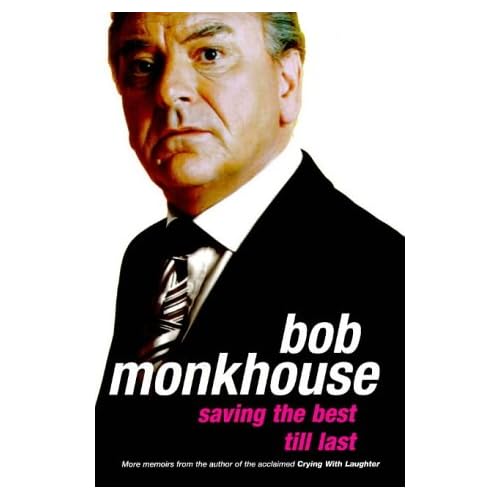
Bob Monkhouse’s collection of diaries from the years 1993-1998, Over the Limit, contains a brilliant story about the music hall comedian Ronald Frankau (who I've already mentioned elsewhere on this blog here and here) upbraiding him for stealing material. It’s worth repeating here, and gives me a chance to post another Frankau recording and plug the Windyridge website again.


The Festive Five (2010) - Allen Ginsburg's Dreams

I present to you an incredibly selfish selection of five songs that would get played in my fantasy kitchen on Christmas Day. Or in my fantasy shed. Or my fantasy music room. Or anywhere, really.

A 78s Playlist (The Nine Best 78s on Music Makes Me)

*A CD comprised entirely of rare and unusual 78s is now available here!*

I've got a present for you. It's a 45-minute playlist to introduce you to the 78s available on the site.

Music Makes Me - A 78s Playlist

There's some comedy, melodrama, protest, classical, swing, popular song, folk and, some, well, bagpipes.

Think of it as a lovingly made mixtape, one that might encourage you to find more about the site and the artists presented (click here to see the tracklist).

And if you like that sort of thing - shellac, 78s, pre-vinyl scratchy records - if broadband noise is no obstacle to your aural enjoyment, then I present you with the best 78s posts Music Makes Me has to offer...

F.I.R.E. (The 95th Anniversary of Italy's Decision to Join the Triple Entente)

"...encouraged by the Allied invasion of Turkey in April 1915, Italy joined the Triple Entente and declared war on Austria-Hungary on May 23. Fifteen months later Italy declared war on Germany..."

And my guess is that this record, celebrating the new addition to the Triple Entente, was recorded very shortly after that. An obvious morale booster, it works - if it works at all - because the initialism created by the four powers can be read as 'FIRE':

'F' stands for France, And 'I' for Italy; 'R' stands for Russia - But what about the 'E'...

'E', if you hadn't guessed, stands for 'little England'.