Showing posts with label popular song. Show all posts

Evocations of the Dance IV: Crossovers: When Highbrow Went Lowbrow, When Lowbrow Went Highbrow (1)


http://www.jazzstudiesonline.org/files/Jazz%20as%20Decal.pdf

Fair warning: this is an exercise in false dichotomies – jazz and classical music in the twentieth century were often feeding off similar roots. But my key contention is that even now, long after Gunther Schuller’s ‘Third Stream’, the phenomenon that is the appeal of ‘World Music’, and the fusion of everything that isn’t bolted down (to mix a metaphor), we still have a sense of what is jazz and what is classical music.

It could be borrowings of melodic, harmonic or rhythmic qualities, or it could be the tendency of jazz musicians to favour more complex harmonies or to otherwise show their allegiance to the avant garde, which seems to me more of a highbrow borrowing from the classical music world than an indigenous jazz trait.

So, the following list of tracks represent a slightly selective history of the confluence of jazz tracks with classical elements and classical tracks with a jazz influence.

I want this list to be an organic thing. If you can suggest any tracks I’ve neglected, please leave a comment.

Late 19th & Early 20th Century
 

YearThe Jazz Side Of ThingsThe Classical Side Of Things
1869
Hungarian Dance No. 5 in G minor (Brahms, 1869) - Yehudi Menuhin, p. Adolph Baller - 1947
1902On Emancipation Day (from In Dahomey, Will Marion Cook & Paul Lawrence Dunbar) - Len Spencer, banjo Vess L. Ossman - 1902
1903I'm A Jonah Man (from In Dahomey, Will Marion Cook & Paul Lawrence Dunbar) - Arthur Collins - 1903
1904Smoky Mokes (Cakewalk) - Peerless Orchestra - 1904Allegro Marcato (Three Pieces) (Frank Bridge, 1904) - Phantasie Quartet - 1994
1905
Bethena (Concert Waltz) (Scott Joplin, 1905) - Joshua Rifkin - 1970
1906
Central Park in the Dark (Ives, 1906) - Vladimir Cherniavsky & the Polymusic Chamber Orchestra - 1951
1908
Golliwogg’s Cakewalk (Debussy, 1908) - Sergei Rachmaninov - 1921
1909
In Dahomey (Cakewalk Smasher) (Percy Grainger, 1909) - Marc-Andre Hamelin - 1996
1910Dere was a man (from Treemonisha, Scott Joplin, 1910) - Gunther Schuller - 1976
1911
Polka de W.R. for piano in A flat major (Behr arr. Rachmaninov, 1911) - Sergei Rachmaninov - 1929
1914Swing Along (Will Marion Cook) - The Afro-American Folk Singers - 1914
Castle House Rag (James Reese Europe) - Europe’s Society Orchestra - 1914
1915
Chinese Blues (1915) - Sousa's Band - 1916
1916That Funny Jas Band from Dixieland (Edison, first recording) - Collins and Harlan - 1916
1917That Funny Jas Band from Dixieland (Victor, second recording) - Collins and Harlan - 1917Rag-time du paquebot (edited) (from Parade, Erik Satie, 1917) - p. Georges Auric & Frances Poulenc - 1937
Livery Stable Blues - The Original Dixieland Jass Band - 1917
1918
Rag-Time (Stravinsky, 1918) - Marcelle Meyer - 1925
1919Rose Room - Art Hickman’s Orchestra - 1919Piano Rag Music (Stravinsky, 1919) - Stravinsky - 1938

Download Part 1: 1800-1909 here.

Download Part 2: 1910-1919 here.

What Kind of Music Makes You?

There's a pivotal scene in Woody Allen's Manhattan where he reels off the things he couldn't live without into a tape recorder. Although you might argue with some of them, it's difficult to defend anyone who says they could live without the voice of Frank Sinatra. 

I really only have two loves, reading and music. I tried to make a quick list. I realise how useless these lists are (and the longer, the more useless, I have found). Perhaps, however, such a list might help me find a core interest.

Musicians and composers
Irving Berlin
Johnny Mercer
George Gershwin (especially Porgy & Bess)
Bessie Smith
Pink Floyd (with and without Syd Barrett, but not without Roger Waters)
The Beatles
Joe Meek
Tom Waits
Bob Dylan (any period)
Louis Armstrong
Music hall legends (Sam Mayo, Ronald Frankau, Talbot O'Farrell)
Tchaikovsky
Aaron Copland
Mabel Mercer
Noel Coward
Stephen Sondheim
Poets
Philip Larkin
John Keats
Wallace Stevens
Ted Hughes
Sylvia Plath
Carol Ann Duffy
W.H. Auden
Novelists
Martin Amis
Armistead Maupin
Margaret Atwood
Ian McEwan
Milan Kundera
Saul Bellow
John Updike
Henry Green
Flann O'Brien
Albert Camus
Assorted (Critics, humorists, non-fiction writers, short story writers)
V.S. Pritchett
Richard Rorty
St. Augustine
S.J. Perelman
Martin Heidegger
Whitney Balliett
Thomas Nagel

If you are a regular reader of this site, has a similar list of interests brought you here? Are there things I should be getting into that my Amazon recommendations have missed?

Another Talbot O’Farrell Video – Little Green Heaven

Again, from the Pathe website. Before singing ‘Little Green Heaven’ he gives us some comic patter about the use of microphones on stage: “God’s gift to the anaemic terror.”


Other posts on Tablot O'Farrell, including those with mp3s: 

The Great Tablot O’Farrell

An Encounter with Talbot O’Farrell

Talbot O’Farrell: Yorkshireman or Irishman?

Timbre! Unusual Instrumentation Playlist - Vol. I


Timbre, as Frank Zappa says in the Real Frank Zappa Book, is everything. But it’s also confusing. To a Westerner, the sitar eternally signifies the mysterious allure of the East, while – as Talvin Singh once pointed out – ‘in Bombay, an electric guitar is exotic’. Why is this?
ABOVE: A rare and dangerous example of the urethra flute.

This playlist argues that context, rather than the instrument itself, is the key. I hope to demonstrate this by putting fifteen instruments in an unexpected context.

It’s a playlist that plunges into the world of exotic tones with a banjo in one hand and an ocarina in the other, and comes out the other side with a sore head, yodelling.
It would be doing the merely obvious
to include such gimmicky instruments
as the trapezoidal harp
(ABOVE).

I have deliberately steered clear of the more familiar examples of instruments being used in an unusual context. Much as I love the sitar on the Beatles’ Norwegian Wood, or Jethro Tull’s use of rock flute, and the whole of the Tubular Bells album, I’m looking here for juxtapositions of timbre that still have the power to surprise.

I hope you find yourself marvelling at the sound of a violin screeching across a dub track, or a sousaphone powering an rock tune, as much as I did.


Jungle Flute – Don Tracy & the Voodoo FamilyFlute

(Dance to the Music of) The Ocarina – Irving BerlinOcarina

The Twisted Nerve – Bernard HermannHarp

Jan Pahechan ho – Mohammed RafiElectric guitar

Got a Match – Frank GallopHarpsichord

I Touch Myself – Rolf Harris Wobble board

A Day In The Life – The Koto Ensemble Koto

K.G.’s Half Way Tree – Augustus Pablo & The Simplicity People Violin

Yaman (The Colonel’s Lady) – The Indo-British Ensemble Sitar

Donna Lee – Tom Slavicek Banjo

Prodigy Medley – The Banana Sessions Sousaphone

Take Five – Cayman Islands Steel Pan Jazz Trio Steel pans

Bag’s Groove – Leon Thomas The yodel

Oboe Mambo – Machito And His Afro-Cuban Orchestra Oboe

It’s A Long Way To The Top (If You Wanna Rock ’N’ Roll) – AC/DC Bagpipes

Timbre! Unusual Instrumentation Podcast – Vol. I

 
If you can suggest any more for the next playlist, please leave a comment or contact me.
Oh, and have a happy new year!
My Great Web page

A Concert-in-a Turn - The Honris (Narrated by Peter Honri) (1974)

This post gives those with an interest in the history of music hall a chance to sample a wonderful book about the remarkable Honri family. It’s called Working the Halls by Peter Honri. Like many such books on the subject, it’s now out of print, but this post is a chance for you to read a few excerpts and listen to tracks from the accompanying flexidisc, called Concert-in-a Turn.

ABOVE: Sickert’s Old-Fashioned Mother Of Mine, a portrait of Talbot O’Farrell,
in etching and pastel form, respectively.

It features a loving preface (or ‘Overture’) by Spike Milligan which laments the fact that “a few etchings and paintings by Sickert are the only colourful evidence we have of a great age”, a period “that began with gas-lit stages and ended in the tense days before World War II”.

Sickert’s Brighton Pierrots

An Evening With Alistair Cooke (1955)

The great broadcaster made only a few vinyl recordings, but they are all fabulous. I have featured one of his spoken word records previously: Talk About America.


This LP, however, features him at the piano, whistling, singing and telling stories. I realise that to the youngsters of today, that sounds almost insane. They let him do this? Why didn’t someone sedate him, send him to a nursing home or put him on a stairlift?

There is even a wonderful moment where he demonstrates, with impish glee, the results of an experiment in multi-tracking his own voice.

The album tells a coherent narrative, so is perhaps best listened right through, but once you’ve done that you’ll keep coming back to many of these tracks for more.

Nat Cole - Wild is Love (1960)

Cole experiments here in an LP of love songs by Ray Rasch and Dotty Wayne tied together by a narrative concerning the vicissitudes of love. I think it would have made a fantastic one-man show. There are some spoken word interludes helping to tie the tracks together, and these may well be my favourite parts.


Beggar for the BluesClearly the stand-out track. A stripped-down 6/8 pulses throughout while Cole squeezes everything out of those portamento notes (When love pulls me iiiiiiiiin...).

Pick-UpI like this as an example of a jazz carpe diem. Cole’s pitch-perfect sleaziness is quite a contrast with the next track.

Hold Her TightThis is an example of the spoken word interludes that punctuate the album. Cole has got such a trustworthy voice that what could be interminably cheesy sounds genuine.

Peggy Lee Sings The Man I Love (Arr. Riddle, Cond. Sinatra)

Featuring an orchestra conducted by Sinatra. And he does a good job. This post is no longer displayed here. You can find it here now.

Evocations of The Dance - Part II - A Eudora Welty Playlist

If you’re wondering what the first Evocations of the Dance post was, click here to find out.

The opening of Eudora Welty’s Powerhouse (1941) is one of those masterful pieces of writing you come up with in your dreams but which on real paper seems to elude you:
He’s here on tour from the city – “Powerhouse and His Keyboard” – “Powerhouse and His Tasmanians” – think of the things he calls himself! There’s no one in the world like him. You can’t tell what he is. [...] He’s not coal black – beverage colored – looks like a preacher when his mouth is going every minute: like a monkey’s when it looks for something. Improvising, coming on a light and childish melody – smooch – he loves it with his mouth.
Whitney Balliett, eat your heart out!

Shortly after reading this we learn that hardly anybody is dancing. Why not?

It’s a white dance, and nobody dances, except a few straggling jitterbugs and two elderly couples. Everybody just stands around the band and watches Powerhouse. Sometimes they steal glances at one another, as if to say, Of course, you know how it is with them–Negroes–band leaders–they would play the same way, giving all they've got, for an audience of one... When somebody, no matter who, gives everything, it makes people feel ashamed for him.

Welty is said to have written the story after she had been to a dance in 1940 at which Fats Waller and his band had been playing. Call me avant garde if you like, but I really think there’s something to be gained from listening to the tracks I’m going to post alongside reading the story.

The story is like a jazz solo, riffing and quoting from the songs played that evening. The story explores the complicated relationship between the black performer Powerhouse (based on Waller) and his mixed-race audience. That said, the blend of sweet, trite love songs and ‘hot’ jazz tunes suggests Welty’s expecting the reader to have a familiarity with the subtle musical textures.

Really, I suggest you download these records below and make a playlist to put on while you read the story. You’ll come away astonished at how much the music is part of the texture of the story.

The Fool on the Hill: The Beatles Songbook Vol. 1

It contains multitudes (of cheesy crap) but there is something spirited – and, dare I say it, “cool” – about this at times amateurish instrumental tribute to the Four Horsemen of the Popocalypse.

Ambrose - A Tribute to Cole Porter

Sam Browne, Anne Shelton and Evelyn Dall sing to these stylish orchestrations from the Porter songbook.

Anne Shelton has been featured at MMM before here and here. I didn't realise I had such a thing for her.

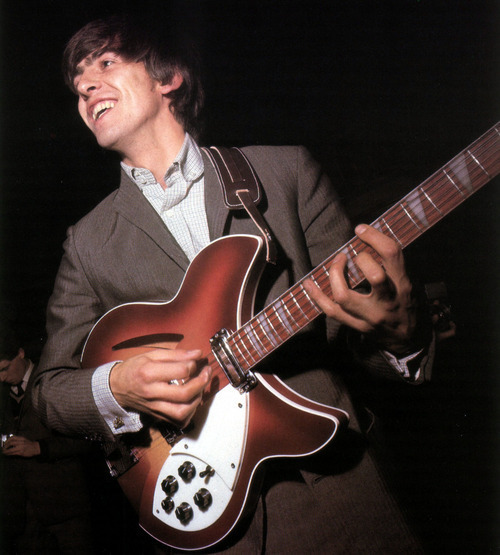
Why Harrison Preferred Minors: Notes Towards An Analysis Of The Beatles’ Use Of Descending Chord Progressions

Whenever someone proclaims in a review of a new single that it is ‘Beatlesque’, my ears prick up. Of course, you’re going to give any song with this kind of press a hard time, but what really bugs me is when lazy reviewers describe as ‘Beatlesque’ any song that features a descending chord progression.

I wondered if there was any truth in the idea. I looked around on a few sites and forums and found nothing on this topic – in fact, I was told it was unquantifiable. I liked the idea of the challenge. So here is my attempt to quantify the Beatles’ use of such figures.


Four Last Songs (1959-1980) - II - Four More Last Songs

Another quartet of beautiful songs that were the last things their composers wrote.


Harpsichord Moods - Gilbert O'Sullivan 1973

A whole album of these wacky, stompy versions of the Seventies star’s hits is a bit much, so I’ve picked three tracks you’ll really love.


Irving Berlin - Vol II: “Daddy Played With All His Fingers”

This post was inspired by two things: reading A Daughter’s Memoir by Berlin’s daughter, Mary Ellin Barrett, and seeing the following clip of Berlin playing the piano, the only one extant to my knowledge:

Irving Berlin on his 75th birthday, who, despite the caption on the Pathé website, is playing “Oh, How I Hate To Get Up In The Morning!”

Four Last Songs (1937-1958) - I

It took me half of a Sunday to do it, but after I had hatched the idea of a punning collection of last songs by various composers of popular music*, I racked my brains (and the Internet) and came up with four decent last songs.


Two Soulful Jazz Albums I've Bought Recently

Two LPs I bought recently have been featured on the blog Singer–Saints (now defunct).
These are the albums in question:

Dinah Washington’s Drinking Again. Do get it because it’s absolutely wonderful, particularly the tracks “Just Friends”, “Drinking Again” and “For All We Know”.
The Lee Wiley compilation As Time Goes By. The tracks “Melancholy Baby” and “Make Believe” are about the best versions of those tunes you’re likely to hear.

Talbot O'Farrell - Yorkshireman or Irishman?

In my last post on the great tenor I claimed he was Yorkshire-born.

However, a recent Google alert for his name brought up an article in The Sydney Morning Herald, of Saturday 13 May 1922, where he himself claims he was
born at Enniscorthy, County Wexford, and that his wife is one of the Talbots of Wexford itself. Many people believe that Talbot is an English name. The family is of Irish descent, however, and about six hundred years ago introduced the wool industry into England.
It’s no matter to me, really: the songs don't depend on authenticity, but on the warmth and colour of his voice. Point in case: I have just been listening to ‘Dear Little Irish Mother’ while writing this.


The above are enlargeable pictures of the article – there’s a real sense of surprise, mixed with pride, at his fame. Celebrity is certainly not a new phenomenon.

ADDENDUM: March 8th, 2011

Two findings:

1. According to the City of London Phonograph and Gramophone Society, he recorded under the name of William McIvor and “met with only moderate success [...] until he decided to change his name”. So: does anyone have any William McIvor records?

2. From the Dictionary of Pseudonyms: “The performer claimed an Irish background, although he actually came from the north of England. He earlier tried out a Scottish persona as Jock McIver”. So could that be Jock McIver?

The Best of The Alternate Beatles

To those who thought the Beatles couldn't be covered, I am offering a sampler of tracks - one representing each album - in the hope that it might win you over to the virtues of this downloadable 15-album collection of cover versions!

From Sandie Shaw to Lord Sitar, from Ruben Blades to Swan Arcade, this CD-length collection hints at the wonderful range of covers available on each album.


The Alternate Past Masters I & II

And that's it. The last of the Alternate Beatles. Not with a bang, but with a whimper. And a double whimper, at that.

The singles collections aren't among the most played albums in my collection, but after listening to some of the more excruciatingly bland covers of the B-sides, I have to say the Beatles have gone up even further in my estimation. They really were geniuses to be able to perform the hell out of those songs and make something as trite as 'I'll Get You' into an exhilarating experience.