Showing posts with label folk. Show all posts

Timbre! Unusual Instrumentation Playlist - Vol. I


Timbre, as Frank Zappa says in the Real Frank Zappa Book, is everything. But it’s also confusing. To a Westerner, the sitar eternally signifies the mysterious allure of the East, while – as Talvin Singh once pointed out – ‘in Bombay, an electric guitar is exotic’. Why is this?
ABOVE: A rare and dangerous example of the urethra flute.

This playlist argues that context, rather than the instrument itself, is the key. I hope to demonstrate this by putting fifteen instruments in an unexpected context.

It’s a playlist that plunges into the world of exotic tones with a banjo in one hand and an ocarina in the other, and comes out the other side with a sore head, yodelling.
It would be doing the merely obvious
to include such gimmicky instruments
as the trapezoidal harp
(ABOVE).

I have deliberately steered clear of the more familiar examples of instruments being used in an unusual context. Much as I love the sitar on the Beatles’ Norwegian Wood, or Jethro Tull’s use of rock flute, and the whole of the Tubular Bells album, I’m looking here for juxtapositions of timbre that still have the power to surprise.

I hope you find yourself marvelling at the sound of a violin screeching across a dub track, or a sousaphone powering an rock tune, as much as I did.


Jungle Flute – Don Tracy & the Voodoo FamilyFlute

(Dance to the Music of) The Ocarina – Irving BerlinOcarina

The Twisted Nerve – Bernard HermannHarp

Jan Pahechan ho – Mohammed RafiElectric guitar

Got a Match – Frank GallopHarpsichord

I Touch Myself – Rolf Harris Wobble board

A Day In The Life – The Koto Ensemble Koto

K.G.’s Half Way Tree – Augustus Pablo & The Simplicity People Violin

Yaman (The Colonel’s Lady) – The Indo-British Ensemble Sitar

Donna Lee – Tom Slavicek Banjo

Prodigy Medley – The Banana Sessions Sousaphone

Take Five – Cayman Islands Steel Pan Jazz Trio Steel pans

Bag’s Groove – Leon Thomas The yodel

Oboe Mambo – Machito And His Afro-Cuban Orchestra Oboe

It’s A Long Way To The Top (If You Wanna Rock ’N’ Roll) – AC/DC Bagpipes

Timbre! Unusual Instrumentation Podcast – Vol. I

 
If you can suggest any more for the next playlist, please leave a comment or contact me.
Oh, and have a happy new year!
My Great Web page

Poor Folk: The Old Sow and Ilkla Moor Baht 'At – Traditionals on 78

While it might produce some great song collectors, England has a frustratingly poor record when it comes to actually recording our own folk songs. English-born recordists such as Hugh Tracey and even the great Cecil Sharp often went further afield for their field recordings (to Southern and Central Africa and north America, respectively).

The trend can be seen in America too (Native American songs were recorded as early as 1890), but it is a fact that many of the earliest wax cylinders that could be considered folk music fall into the ethnographic category, with English recordists often casting their nets beyond Europe.

Of course, we have these recordists to thank for capturing on shellac many cultures which have since vanished, but that surprisingly few people found home-grown folk music worth recording is a constant surprise to me.

Leslie SaronyAlbert Richardson
All this is a preamble to these curious recordings. Whenever English singers or composers touch ‘folk’ material, there is often a sense of condescension there; you can be fairly sure the material will either be popularised (embellished with fashionable harmonies or Bowlderised for crudities) or classicised (by being notated and sung by trained singers – the Vaughan Williams approach) in some way.

These recordings are interesting in trying to deal more honestly with their material. They are not field recordings, so they should not be judged as such. But I would say that Richardson’s ‘Old Sow’ is one of the bravest and most successful attempts to produce a folk recording in a studio setting ever captured on shellac.

The Old Sow - Leslie Sarony (and male vocal choir)This is the version of the song included on compilations such as Vintage Children’s Favourites 1926-1959. It’s given a little tarting up, with a Gilbert & Sullivan-style chorus bookending the song (which works better on Ilkla Moor Baht ’At, below). It rather irritates me, though, that Sarony fails to make some of the lines scan.

The Old Sow - Albert Richardson, bass (a capella)In 1929 Zonophone recorded an unaccompanied rendition of the song by a young sexton whose jobs at the time included “bell-ringing, grave-digging and gardening for the Rector”. The song had been around for at least a century, a version of this song dating back to a broadside of 1828. Richardson later claimed that the recording company had refused to include one stanza that began, “Now, these little pigs shit in the farmer’s hat”.

On Ilkla Moor Baht ’At - Leslie Sarony (and male vocal choir)Rather a reversal of the old phrase about the devil not having the best tunes, here is an example of a hymn (‘Cranbrook’ by Thomas Clarke) with secular lyrics. I’m rather dubious about Sarony’s Yorkshire accent, but the Gramophone review of 1934 does credit him for his clarity: “for the first time I have heard the words of this classic”.

Buttercup Joe - Albert Richardson, bass (with piano accompaniment)Here Richardson sings another folksy song (it has more of an air of music hall parody of folk music) with earthy subject matter. I think the piano is unnecessary, and creates a slightly odd image of a rustic figure standing by a grand piano at odds with the song’s message.

A 78s Playlist (The Nine Best 78s on Music Makes Me)

*A CD comprised entirely of rare and unusual 78s is now available here!*

I've got a present for you. It's a 45-minute playlist to introduce you to the 78s available on the site.

Music Makes Me - A 78s Playlist

There's some comedy, melodrama, protest, classical, swing, popular song, folk and, some, well, bagpipes.

Think of it as a lovingly made mixtape, one that might encourage you to find more about the site and the artists presented (click here to see the tracklist).

And if you like that sort of thing - shellac, 78s, pre-vinyl scratchy records - if broadband noise is no obstacle to your aural enjoyment, then I present you with the best 78s posts Music Makes Me has to offer...

Wild Hills O'Wannie - The Small Pipes of Northumbria

The Northumbrian pipes are certainly not to be confused with bagpipes. They can carry a melody with a sweet tone and plenty of personality, especially when in the hands of masters such as Billy Pigg.

By posting these I hope to convey my astonishment. Astonishment, that is, at such a beautiful, lithe timbre having eluded my attention for so long.


The Holey Ha'penny - Billy Pigg


The Lark in the Clear Air - Billy Pigg

If you head on over to Topic Records' website you can buy a CD, where the mighty Pigg also plays two fascinating medleys 'Memories/Coates Hall' and 'Skye Crofters/The Swallow's Tail'.

It's also worth getting for the pipes duetting on a 'Salmon Tails up the Water/The Herd on the Hill/Sweet Hesleyside' medley between Colin Caisley & Forster Charlton.

A Guid New Year - More 78s from Scotland


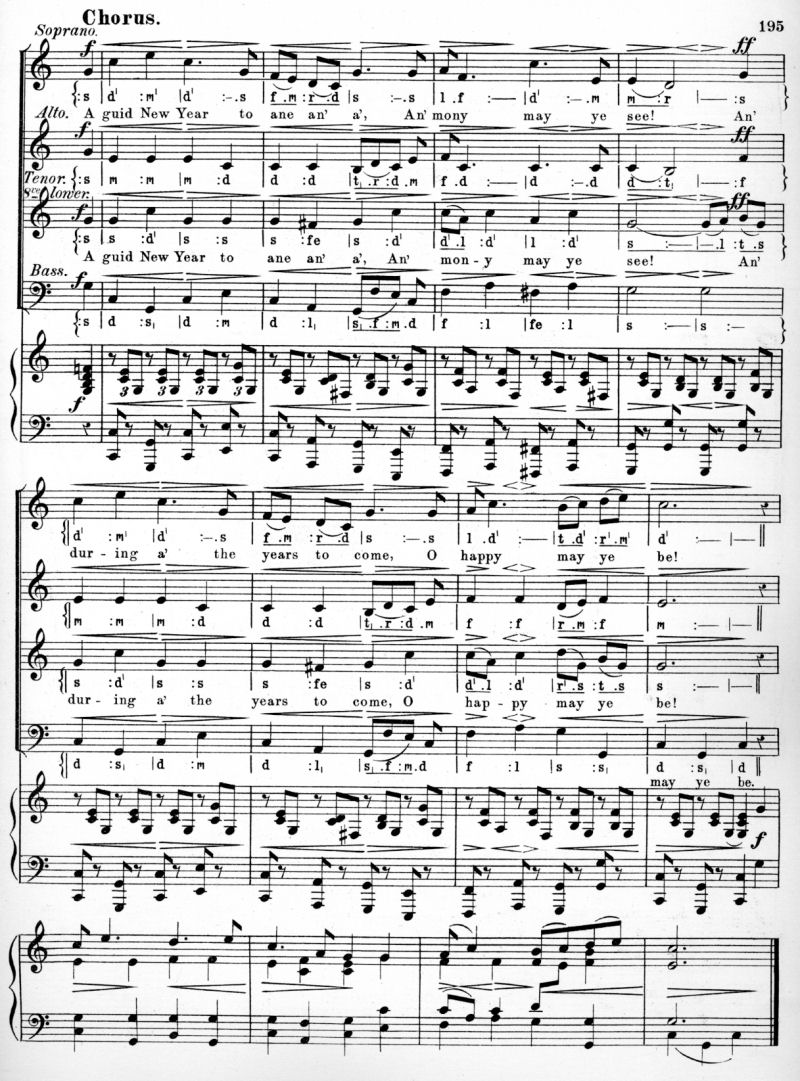
A Guid New Year - The Five Smith Brothers

In the first part of our run-up to Burns Night, I'm posting The Five Smith Brothers' more-materialistic-than-Auld-Land-Syne ode to the New Year. Notice the unexpected clarinet.

More Scottish 78s here.

Recordings and Found Sounds of Marrakesh (Moroccan Holiday Part III)


This is the third instalment of pictures and sounds from Morocco.

(See Part I here, and Part II here.)

Let's start with some traffic recorded on the way to the centre:

Traffic in Marrakech

Moroccan Music (A Holiday in Morocco - Part II)


Marrakech Special Festival

An album offered to me by a man who also tried to interest me in some "shit".

He was a very louche character, but his stall just on the outskirts of the souks made up for it with a good record collection and a big pile of sunglasses and transistor radios.


Usually musical mementoes of a place are a regrettable idea, but this album really does capture the spirit of the Jemaa el Fna (a huge square in the centre of Marrakech that at night becomes an orgy of dance, spectacle and hypnotic African and Arabic rhythms).

Appel et ahouach d'imintanout

Guedra chenguit

Flute karaouyne

Fouaras et ehaouas

Tambours de marrakech

Come back later this month for some found sounds and field recordings from the Jemaa el Fna and elsewhere in Morocco.

Moroccan 45s (A Holiday in Morocco - Part I)


A soulful singer, accompanied in the sparse Moroccan fashion. Latifa (or Latifah) is still performing today.

Latifa Amale (Koutoubiaphone)


Here's another 45 with perhaps sparser instrumenation. Can anyone tell me the name of the record? I know the artist is Sahib ben Maati and that the label was held together with sellotape. (Incidentally, how do records survive out there, in that hot sun?)

Sahib ben Maati - Side One
Sahib ben Maati - Side Two


Finally, a comic duo. Are there any Arabic speakers who are able to give me the gist of this one?

Souris et Belkass

The Wonderful World of Man (1975)

Although it might sound like the blog has taken a homoerotic (or ungrammatical) turn, I must explain that this is an unfortunate misunderstanding. This (in every other way fruity) audio tour celebrates not the male sex but Man, the Isle of.


This is a fantastic album because, while every other (unwanted) album you flip over in a charity shop tells you to Come to Paris, or takes you on A Holiday in Spain, this one is just that little bit closer to home (for the Brit), and so its highlights are, in a way, its disappointments, its bathos.

Expect to hear some Manx folk songs, some original Manx speakers, and the usual guide to the flora, fauna and places of interest. Perhaps you could download it and pop it on your mp3 player to use as a real audio tour the next time you go.

If you are a Manxman (or woman), greetings to you! I hope to go to the Isle of Man one of these days and weasel out one of its few remaining Manx speakers.

The Wonderful World of Man - Side 1

The Wonderful World of Man - Side 2

If you enjoyed this detour to the Isle of Man, have a skeg at the post on accents: English With A Dialect


Anything to Declare? - Moral Re-Armament Productions - 1968 -

'...an outward expression of a new Europe in the making', according to the sleeve notes. The LP seems to be an improbable manifesto for a sort of Christian-socialism. Mostly relentlessly optimistic, in a hollow kind of way, with the occasional nod to Soviet-era work songs.

Something to Declare
Rivet by Rivet
Peace
Chaque Homme Compte
Noah & Sons

More Christian-related rock.

Missa Luba (1967)


Delightful little album of the late Sixties which shows how, at least for one group of singers in the Congo, the ceremony of the Catholic Mass had fused with native songs.

So, while the arrangements feel, as the liner notes put it, “pure Congolese”, snatches of the Mass (see some of the Latin titles) can be detected. As interpretations of the Mass go, it’s really up there with Fauré’s Requiem.

1 Dibwe diamula kabanda

2 Lutuku & a bene kanyoka

3 Ebu bwale kemai

4 Katumbo

5 Seya wa mama ndalamba

6 Banana

7 Twai tshinaminai

8 Kyrie

11 Sanctus

12 Benedictus

13 Agnus dei

Animal Concert in a Cemetery

In 1955, when this track was recorded, Calypso was not yet the popular phenomenon Belafonte briefly made it a year later.

This could be why the album Calypso seems on the whole darker of purpose (though Calypso is never that ominous), a little more experimental than later attempts to recreate the Calypso which played down the chaos inherent in the formula.


Animal Concert in a Cemetery

Incidentally, have a look at some of these Calypso surveys.

The Saltire Music Group - An Evening with Robert Burns

I love this kind of thing! The Soldier's Song as performed here by Frederick Westcott seems a precursor to all those Incredible String Band knees-ups. I will post more of this later.


The Soldier's Song - Frederick Westcott